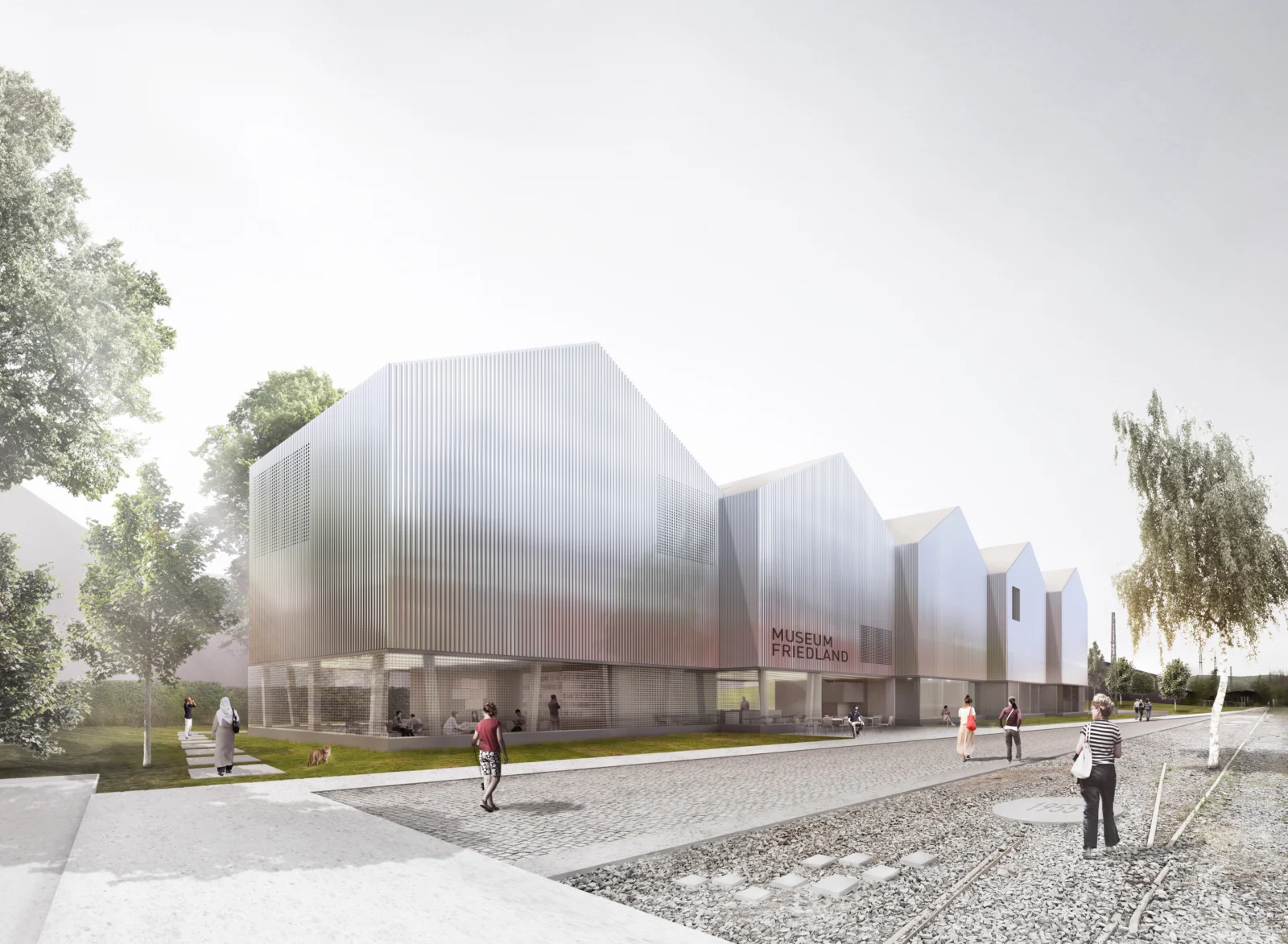
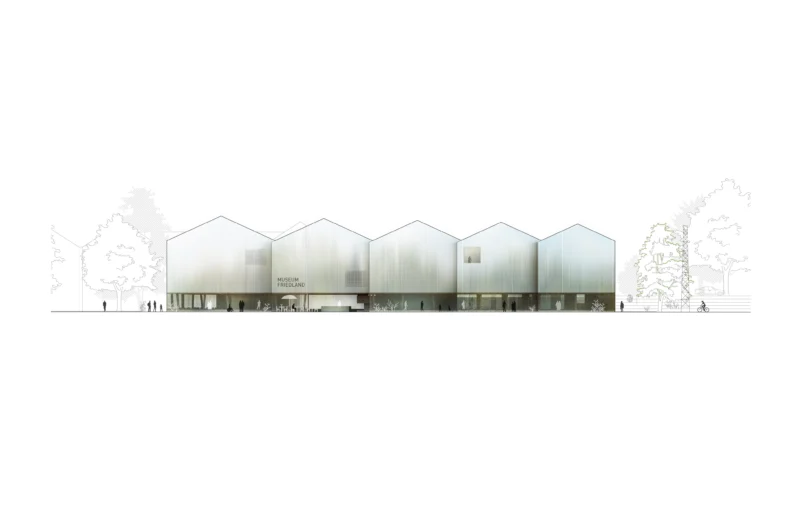
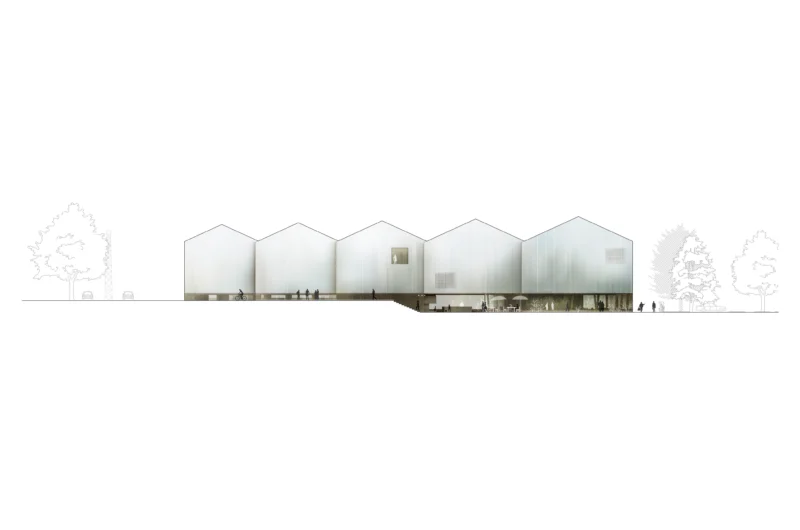
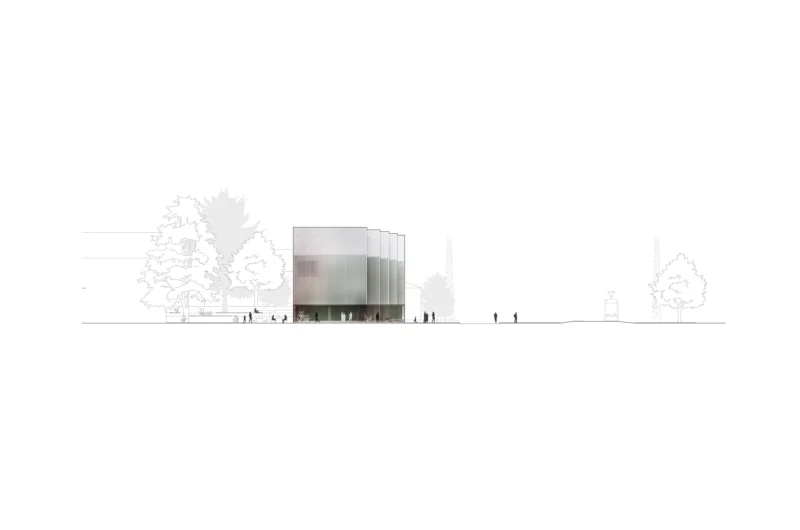
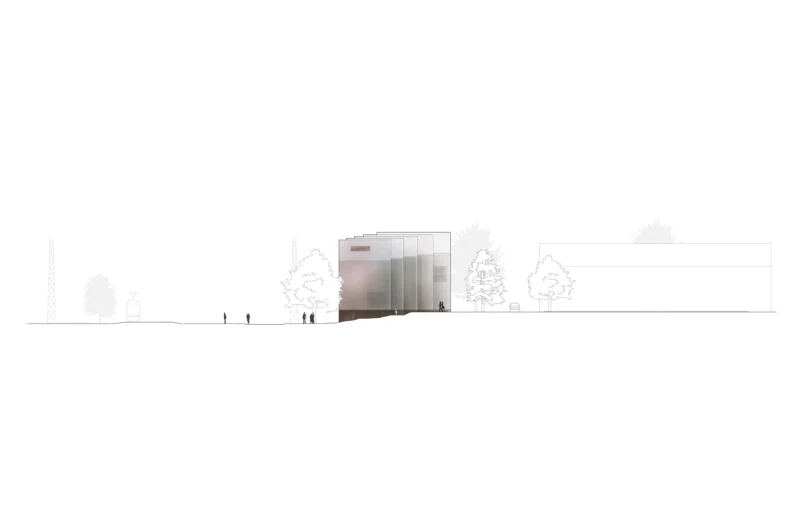
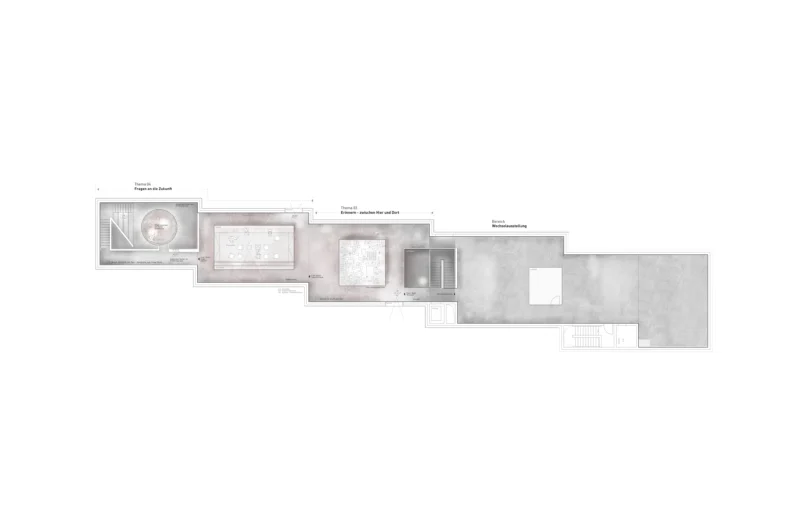
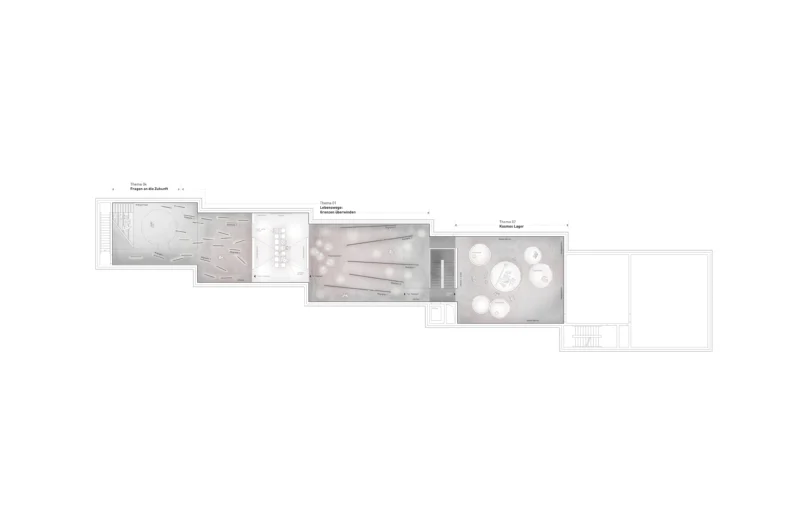
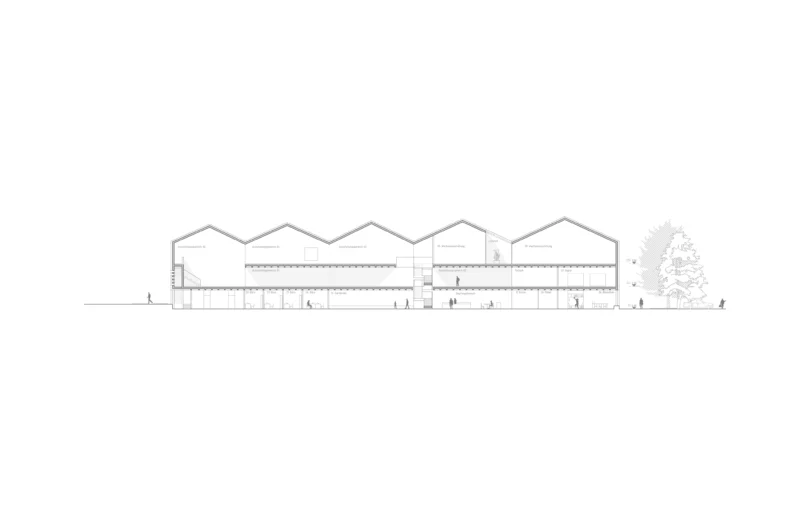
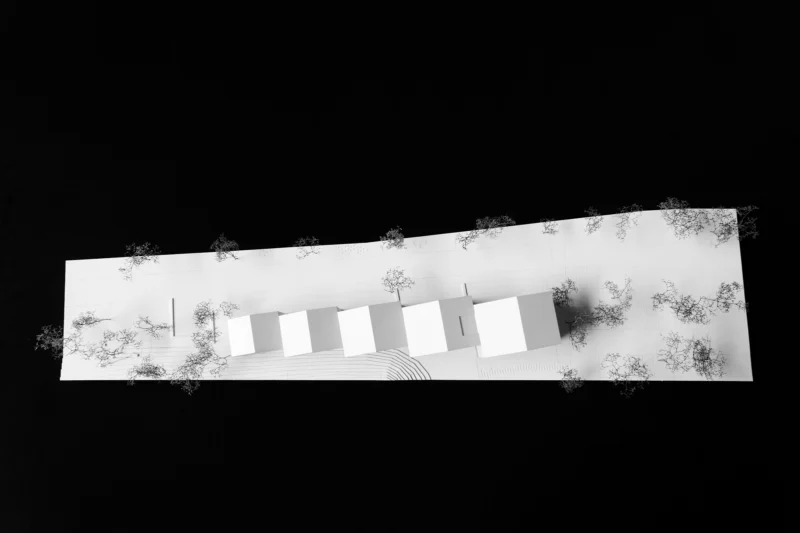
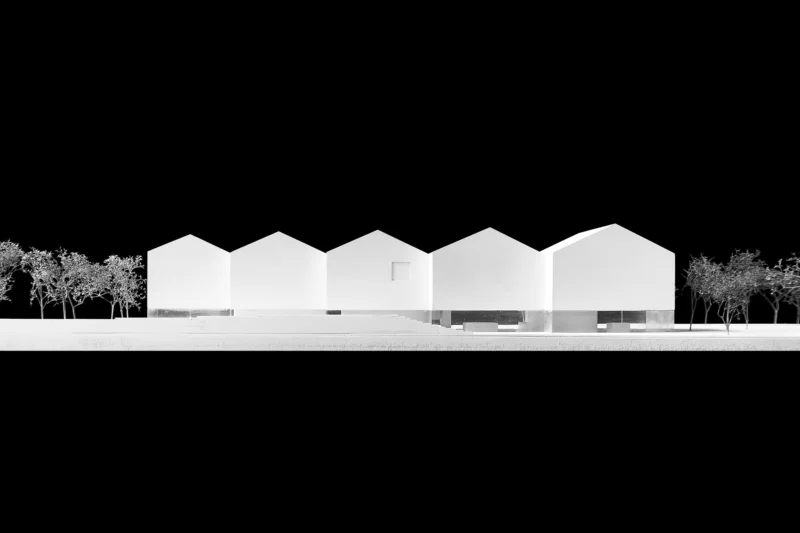
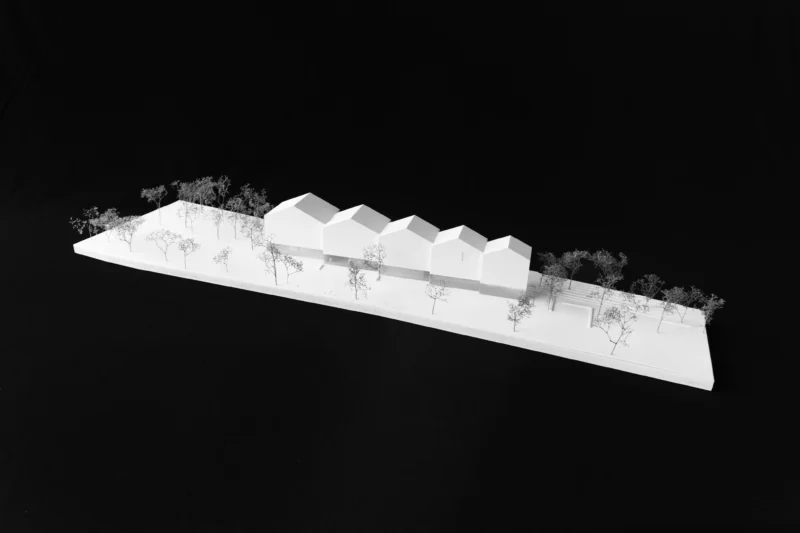
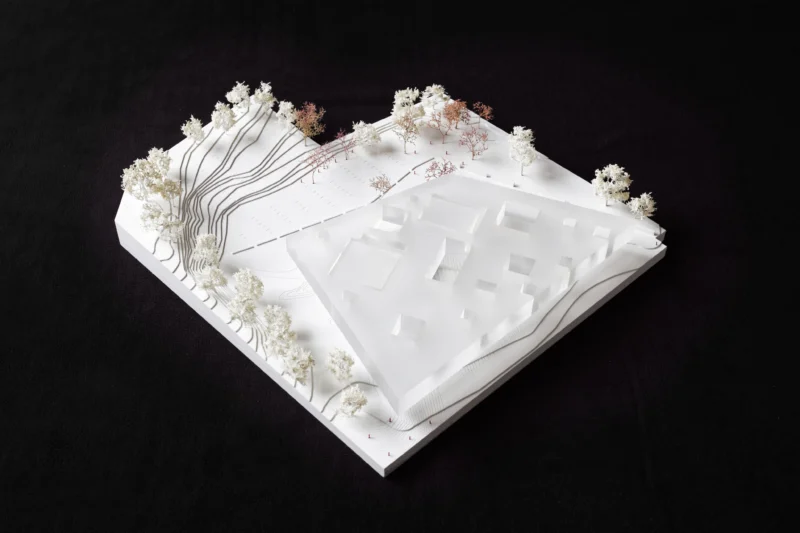
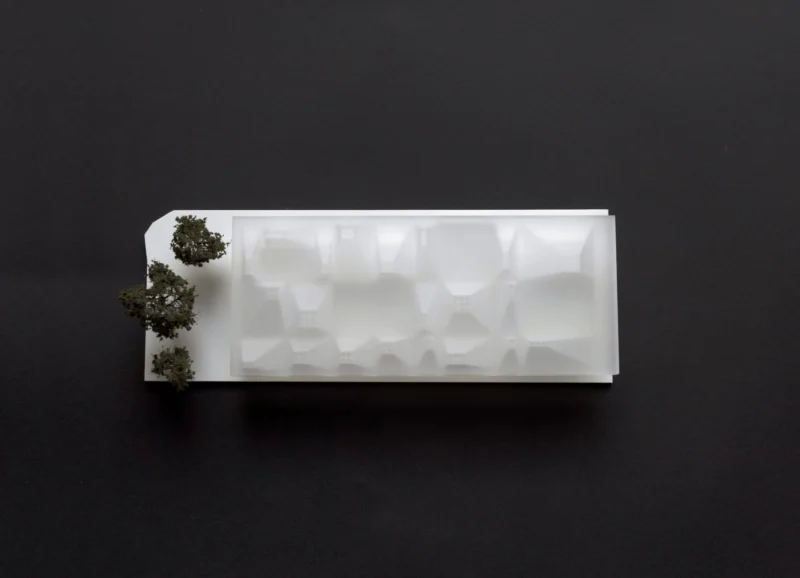
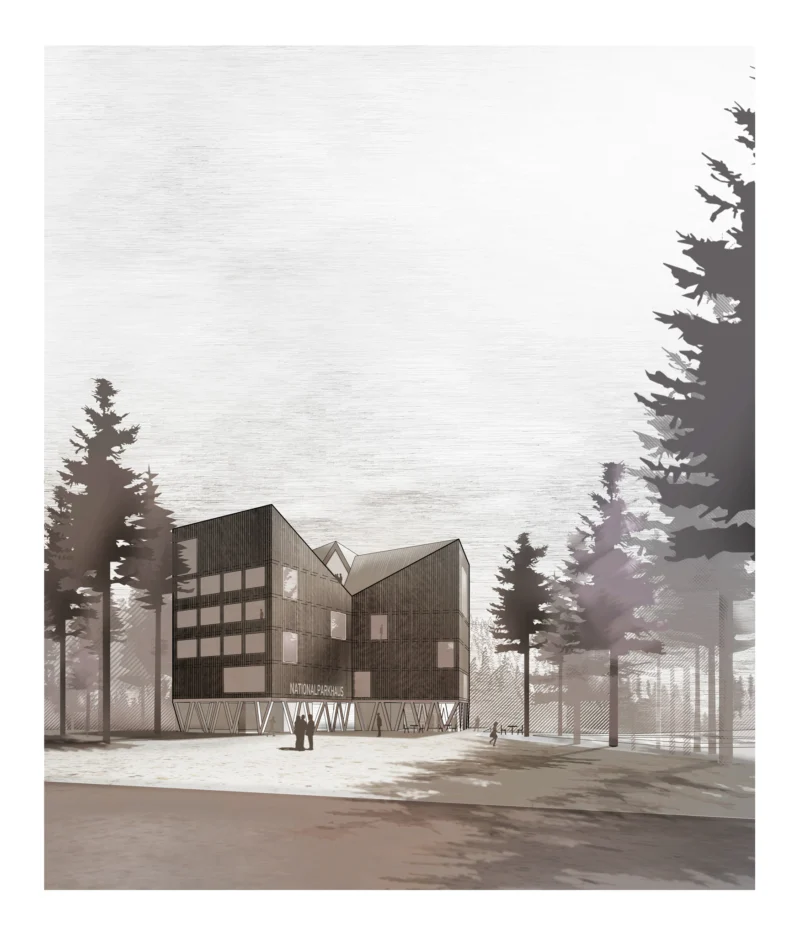
Familiar at first glance, yet multifaceted upon closer inspection—the design for the new documentation center in Friedland translates the tension between home and foreignness into built architecture. Sloping roofs and gables blend into the small-town skyline—yet the consistent design language of the facades unites the buildings into a symbolic whole that evokes familiar residential scenes and the austerity of temporary structures.
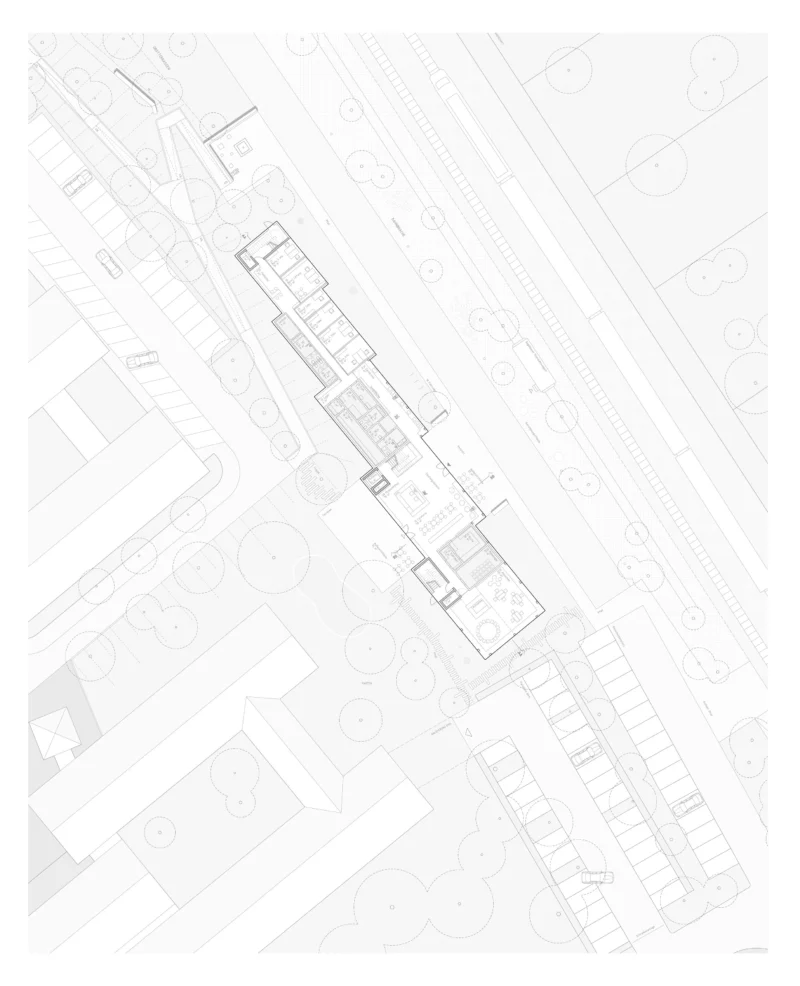
From an urban planning perspective, the new building bridges the gap between the historic train station and the large-scale warehouse structures. The glass-enclosed ground floor opens up on all sides, creating visual connections between the tracks, the visitor center, and the warehouse areas—a communicative “third space” featuring a foyer, café, and library. Above it float the exhibition floors, clad in aluminum trapezoidal sheet metal: protection and security on the one hand, anonymity and aloofness on the other.
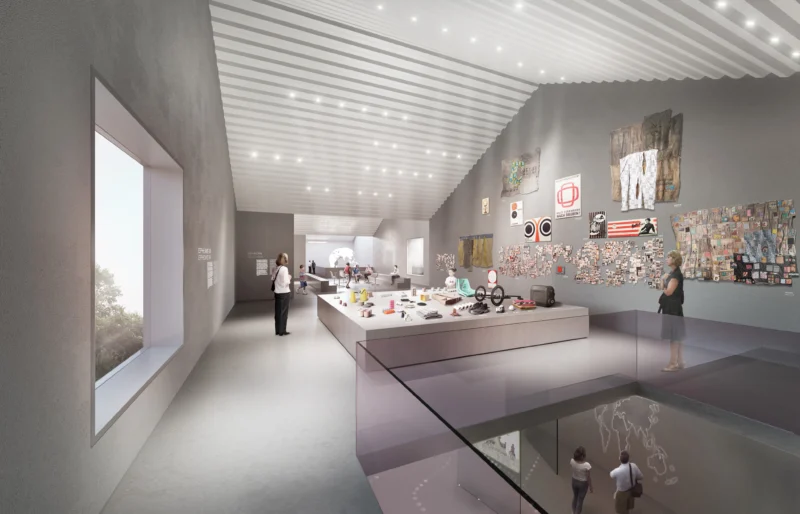
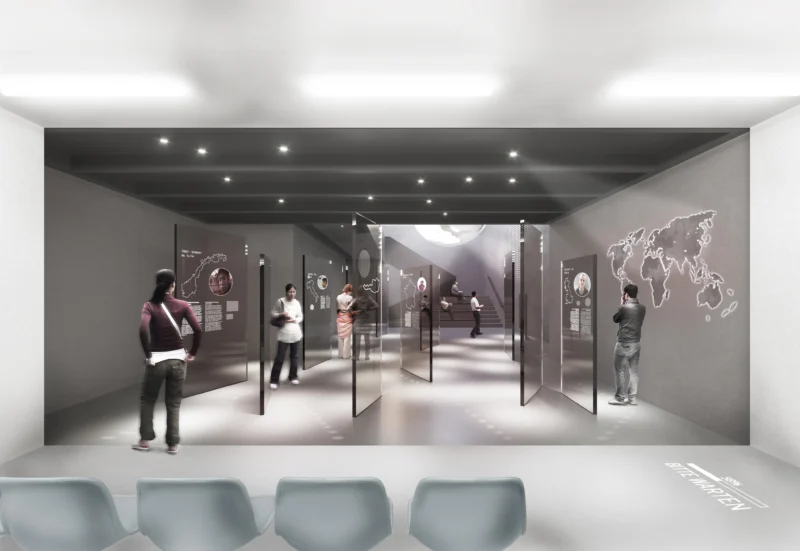
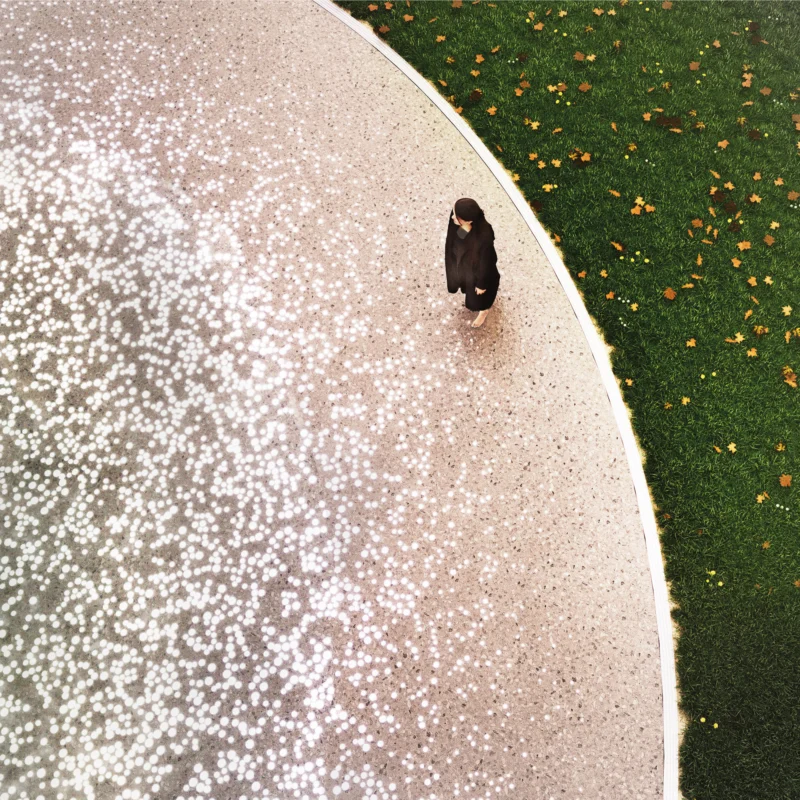
Varying spatial configurations, sightlines, and shifting lighting create a multi-layered framework for the exhibition. The reinforced concrete structural skeleton enables a passive ventilation concept through the chimney effect and building component activation. A visitor path leads through abandoned railway tracks, fruit terraces, and gardens—open spaces that reflect the emotional worlds of refugees.
Openness and enclosure, identity and anonymity—the design uses architectural means to explore the spectrum of what migration entails.